loading
Lead the Shift
01 / About
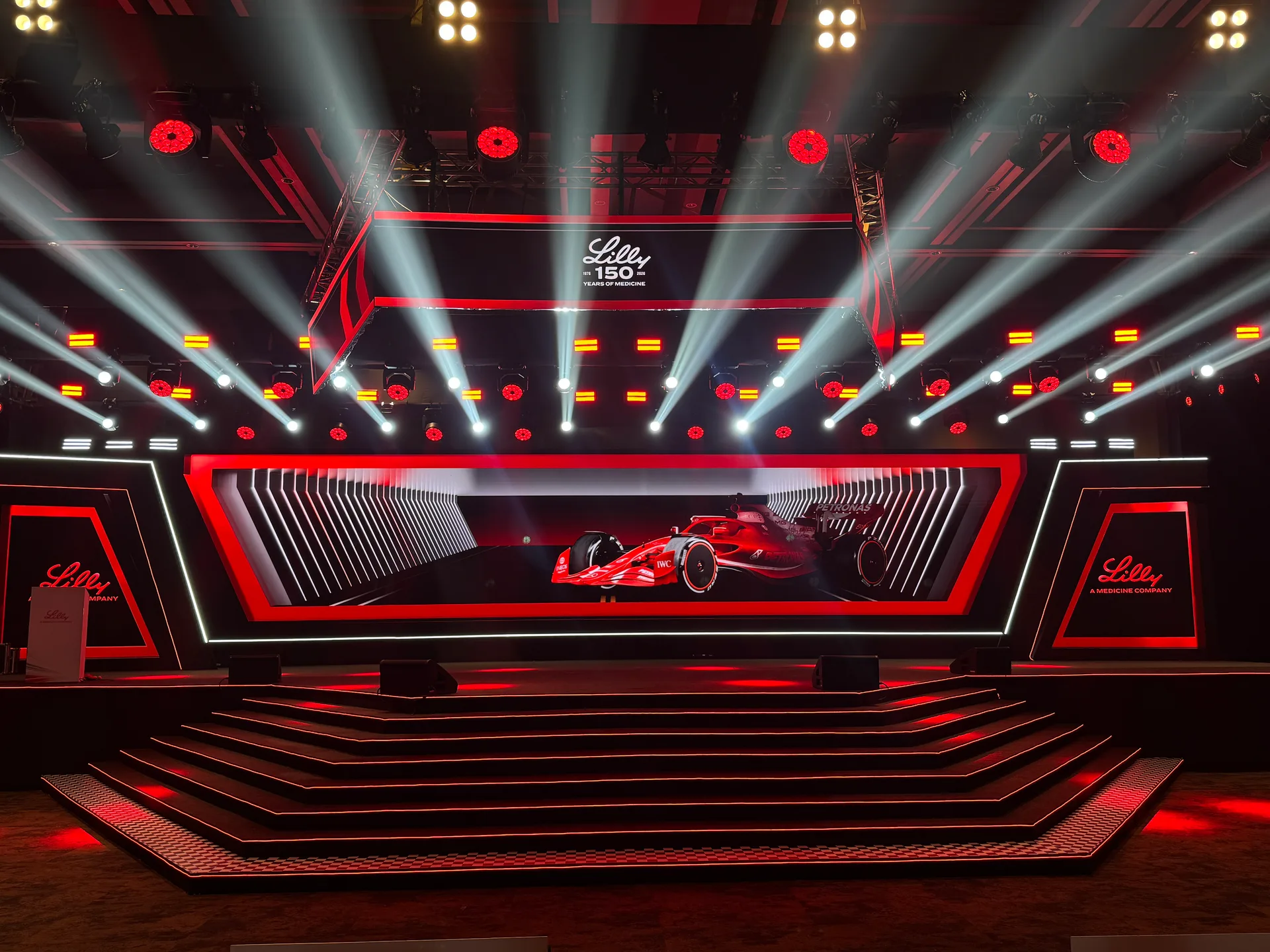
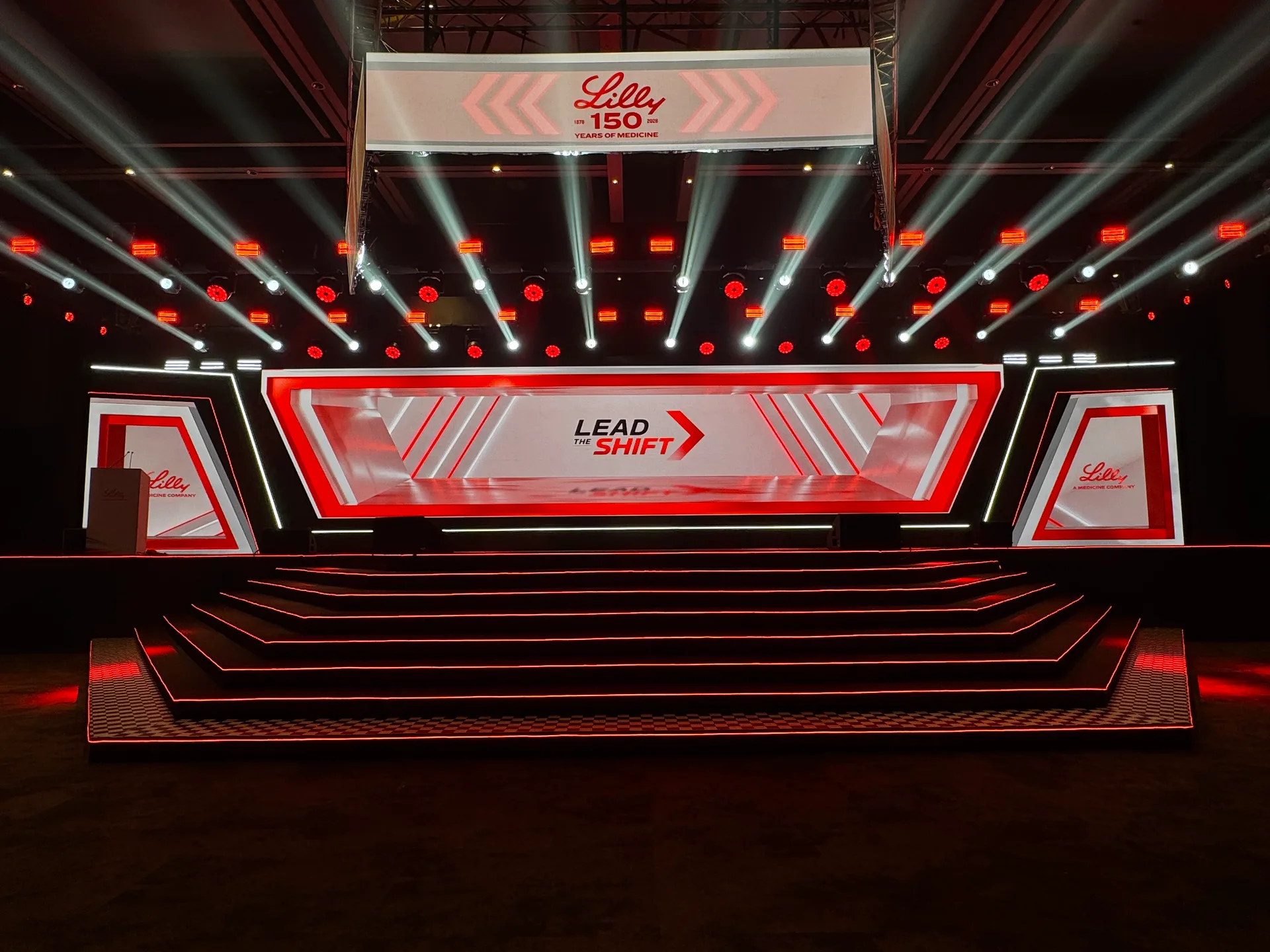
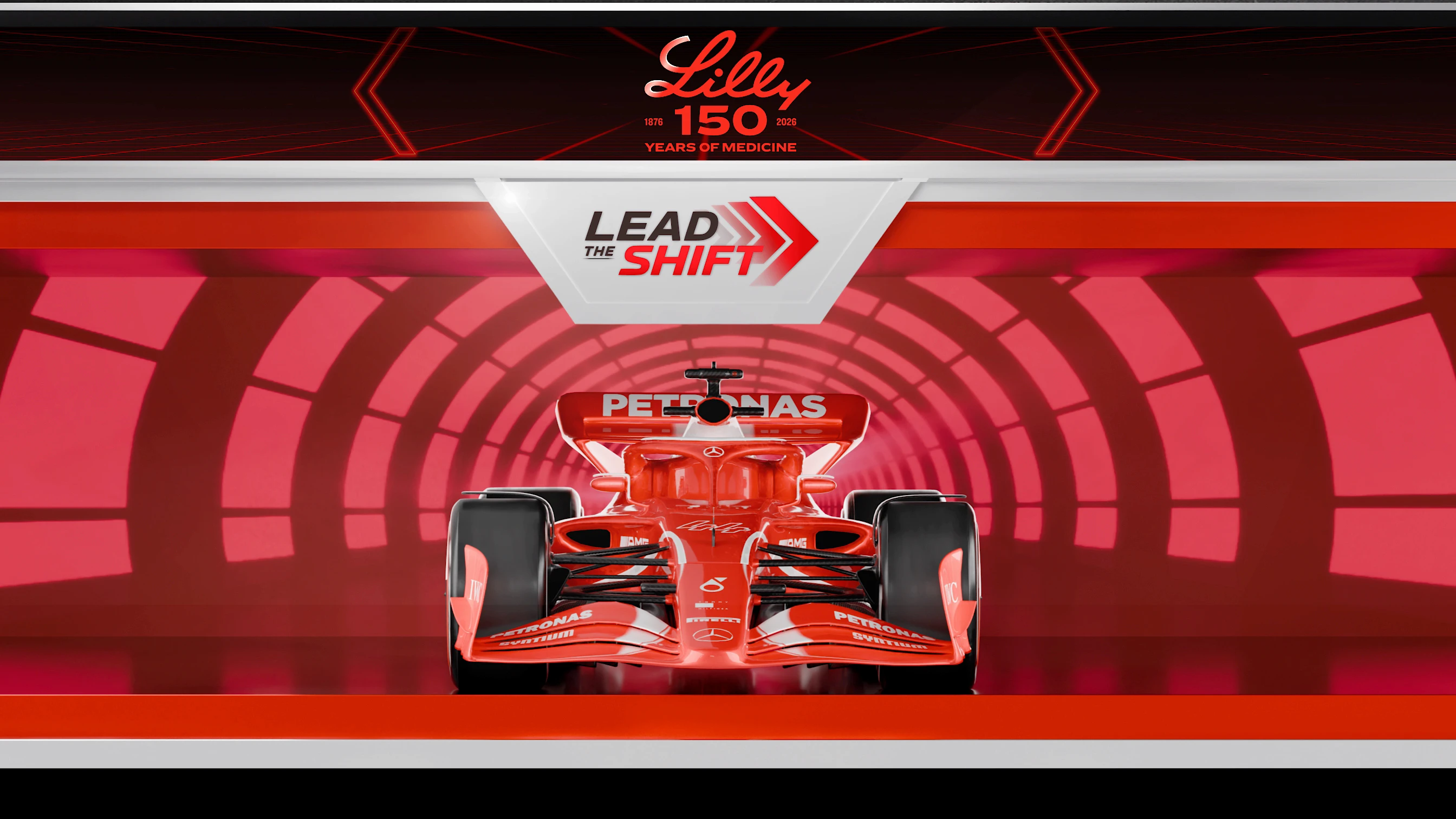
For Eli Lilly's 150 Years of Medicine celebrations, Lead the Shift needed a stage that moved. The brief was event motion for a multi-surface LED rig with one main wall, two angled side wings and a header band, authored as a single 6720×1512 canvas so every surface stays in register.
The shift metaphor is taken literally: a Formula 1 car in the brand's red, launched through a tunnel of light. The loops are built to hold a stage for twenty seconds at a time: an arrival, a hold, and an open frame for the speakers, with the Lilly 150 mark carried on the ticker throughout.
Everything renders at the rig's native pixel map, so what you see here is the actual stage content, letterboxed only by your screen.
- Scope
- Event stage motion
- Deliverables
- Three LED-wall loops, multi-surface layout
- Canvas
- 6720×1512: main wall, side wings, ticker
- Occasion
- Lilly 150 Years: Lead the Shift
02 / Process
- 01
Concept & pixel map
The rig comes first: main wall, angled side wings and header ticker surveyed into one 6720×1512 pixel map, with safe areas marked where trussing and the podium eat into the frame. Every beat is boarded against that map before any geometry exists: arrival, hold, open frame.
- 02
Modelling
The F1 car is built to hold a close read at LED pitch: body shells with real shut lines, suspension and halo geometry, tyres with sidewall detail. The tunnel is instanced light-blade geometry: hundreds of fins driven by one profile, so the corridor can be re-timed without remodelling.
- 03
Materials & shading
A layered PBR livery in the brand red, clearcoat over metallic base, set against brushed-chrome trim and emissive blade materials. Everything is balanced in ACES so the reds survive both the render and the LED processor's gamut without clipping to orange.
- 04
Lighting
The tunnel lights itself: the emissive blades are the key light, with volumetric fog pulled through them so the beams read in air, and a soft rim pass keeping the car's silhouette off the background. Stage-bright, but with the contrast the wall needs to not grey out.
- 05
Camera & choreography
One dolly language across all three loops: a slow push through the tunnel for the arrival, a locked-off hold with drifting blades, and a clean pull-back for the open frame. First and last frames match, so every loop can run for as long as the segment does with no visible join.
- 06
Render & delivery
Rendered at the rig's native resolution at 30fps, graded, and delivered as loop-safe H.264 masters per surface split, plus the composite canvas you see here. The media server takes the pixel map as-is; nothing is scaled at the venue.